


How Much Does a Destination Wedding in Spain Actually Cost in 2027?
It is, genuinely, the question every couple planning a destination wedding in Spain asks first, and the one that gets the vaguest answers. «It depends» is technically accurate and practically useless. This guide gives you real numbers: what the main cost categories are, what you can expect to spend at a quality venue in central Spain, and where the surprises tend to hide.
We’re writing this from our perspective as Huellas del Tiétar, a wedding venue and winery in Lanzahíta, in the Valle del Tiétar, 1 hour 45 minutes from Madrid. We work with couples from across Europe and beyond who choose Spain for their wedding, and we’ve seen the full range of budgets and expectations. What follows is honest.
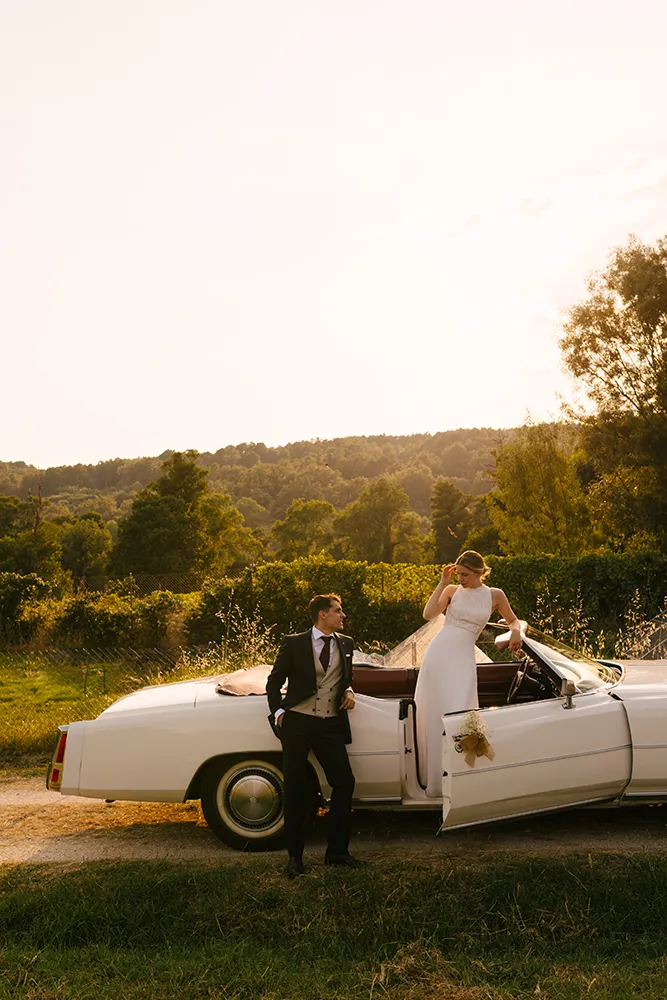
A couple in a classic car in the vineyards of Huellas del Tiétar: Sierra de Gredos in the background, golden light. Lanzahíta, Ávila, Spain.
The real structure of a destination wedding budget in Spain
Before we talk numbers, it’s worth understanding how destination wedding costs in Spain are structured. Unlike some countries where the venue is a one-line item that covers almost everything, Spanish wedding venues typically operate with a modular model: there is a venue hire fee, and then there are per-person food and beverage costs, and then there are optional add-ons. Understanding this structure prevents the most common shock: couples who budget for the venue and forget that catering is a separate, often larger, line.
The main cost categories for a destination wedding in Spain are:
– Venue hire: the exclusive use of the estate and its spaces for your wedding day
– Catering: food and beverages for the cocktail hour and banquet, priced per person
– Ceremony: the space and setup for your civil or symbolic ceremony
– Coordination: a day-of coordinator or local wedding planner (strongly recommended for destination weddings)
– Music and sound: DJ, live musicians, or both
– Photography and video
– Floristry and decoration
– Accommodation for guests
– Legal paperwork and officiant fees
– Transportation for guests (often essential in rural locations)
We’ll go through each of these in turn.
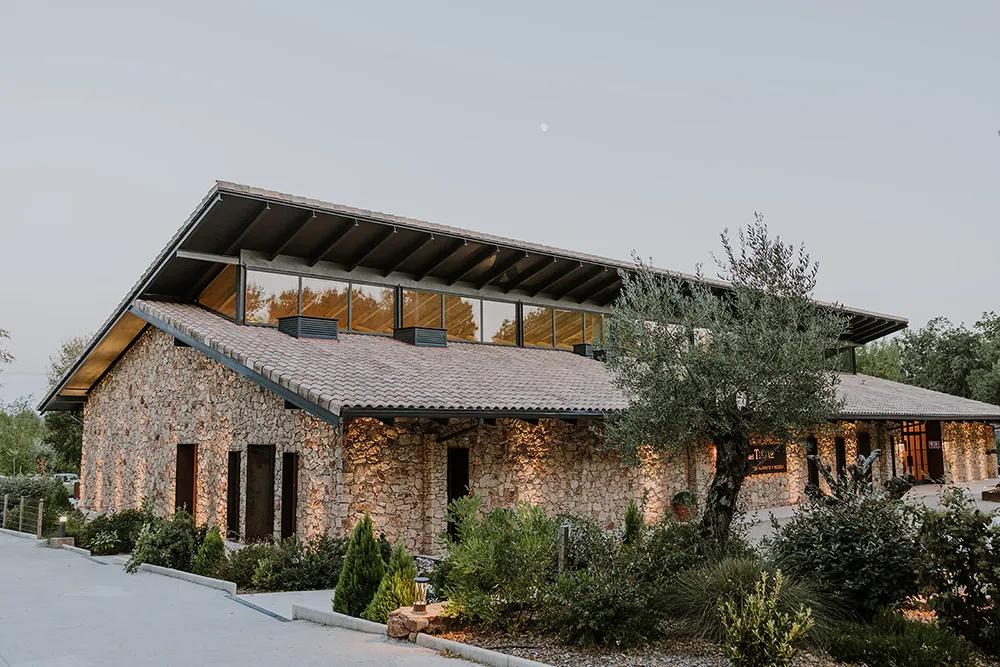
Restaurant of Huellas del Tiétar: centenary olive trees, restaurant building, warm light, nature. Lanzahíta, Ávila.
Venue hire: what you’re actually paying for
At a quality rural estate in Spain, venue hire gives you exclusive use of all the spaces (outdoor ceremony areas, cocktail gardens, indoor reception rooms, and ancillary facilities) for the duration of your wedding day. At premium venues, this typically includes basic infrastructure: tables and chairs, parking for guests and coaches, cleaning during the event, and access to pre-wedding and post-wedding photo sessions.
What venue hire does not typically include is food, beverages, music, or floristry. Those are normally separate.
For a premium estate like Huellas del Tiétar — 50,000 m² of grounds, a professional restaurant kitchen, a winery on site, and multiple ceremony and reception spaces — venue hire costs vary by season and day of the week. In high season (April through October), Saturday bookings sit at the higher end of the range; weekday and Sunday rates are meaningfully lower. Off-season rates (November through March) offer another step down in price, and can make certain dates very attractive for couples with flexibility.
As a general benchmark, venue hire at an established premium estate in central Spain ranges from roughly €2,000–€4,500 depending on season, day, and what’s included. The range is wide because what venues bundle in varies significantly.
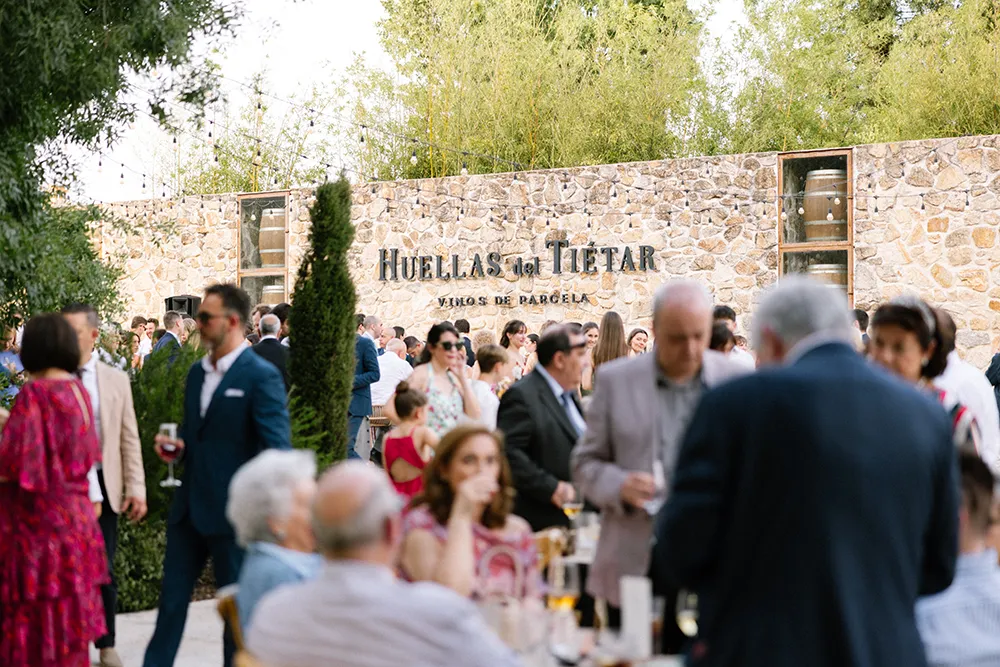
The barrica wall and terrace of Huellas del Tiétar: stone wall with wine barrels, fairy lights, Sierra de Gredos views. Evening light. Lanzahíta.
Catering: the largest single cost, and where Spain genuinely shines
Catering is, almost universally, the biggest line item in a Spanish wedding budget. And for destination wedding couples, it is also the biggest source of positive surprise: the quality of food and wine at premium Spanish venues is exceptional, and the value compared to equivalent quality in the UK, France, or the Netherlands is striking.
At Huellas del Tiétar, catering means food prepared by Chef Jorge García — Maestro Asador of Castilla y León, with 2 Soles Repsol and 20+ years of experience — using an in-house kitchen, seasonal produce from the valley, and wines from our own D.O.P. Cebreros winery. The wines served at your wedding are not sourced from a supplier: they are made on the estate where you’re getting married.
For premium in-house catering at a venue of this level, couples should budget in a broad range of €150–€200+ per person for the full cocktail and banquet experience, depending on menu selections, wine pairings, and the number of courses. Specific pricing depends on your chosen menu and is always confirmed in a personal proposal.
For context: a wedding of 100 guests typically sees catering as the single line item that most significantly affects total cost. A 20-guest increase or decrease moves the overall budget more than most other variables combined.
Ceremony costs: civil vs. symbolic
For foreign couples getting married in Spain, the legal pathway matters. A fully legal Spanish civil wedding requires an administrative process (tramitación del expediente matrimonial) that takes several months and requires documentation from your home country. Many destination wedding couples choose instead to do the legal paperwork at home, registering their marriage at a local registry office or equivalent before or after the Spain celebration, and hold a symbolic ceremony in Spain. The symbolic ceremony is the event your guests attend; it’s fully personalizable and can be conducted in English, French, or any language you choose.
If you do want a legally binding civil ceremony in Spain, it’s possible at the venue if the local ayuntamiento (town hall) sends an official representative, something that requires coordination and sufficient lead time. Huellas del Tiétar can guide you through the logistics for either option.
Ceremony space at Huellas del Tiétar is offered as an add-on to venue hire. It includes dedicated ceremony setup (seating, arch, officiating table, basic floral), a professional sound technician, and full technical support. Budget approximately €800–€1,000 for ceremony space and setup as a starting benchmark.
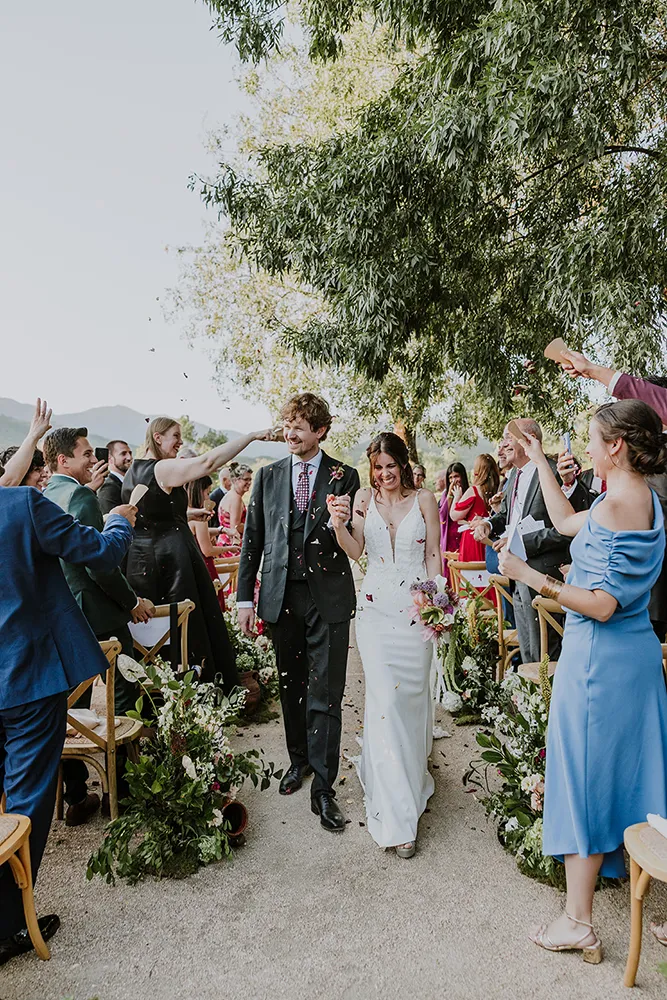
Outdoor ceremony at Huellas del Tiétar: couples’ aisle flanked by wildflowers, guests seated on crossback chairs, mountain backdrop. Lanzahíta, Ávila.
Coordination, music, and the logistics of the day
A local wedding planner or a day-of coordinator team is not optional for destination weddings, it’s the difference between a day you enjoy and a day you spend managing. A coordinator at the venue handles vendor arrivals, timing, seating plan logistics, ceremony flow, and the hundred small decisions that would otherwise fall to you or your family. At Huellas del Tiétar, we offer coordination for the wedding day as an add-on service starting from approximately €700–€800 and we can also recommend you local wedding planners. For destination weddings, where the couple and their families are typically less familiar with Spanish logistics, this is one of the highest-value items in the budget.
Music and sound is another category where bundling makes sense. A full-service music and sound package for a wedding — covering ceremony, cocktail, banquet, and the first hours of the evening with a DJ, full lighting rig, and sound equipment — typically runs from €1,300–€2,000+ at premium venues. Huellas del Tiétar offers an integrated music and sound service that covers all phases of your day.
Live music during the cocktail hour or ceremony is an addition many couples consider. A solo musician or small ensemble for the ceremony and cocktail typically adds €800–€1,500 to the music budget.
Photography, floristry, and the vendor budget
Spain has an extraordinary pool of wedding photographers, and the destination wedding market means English-speaking talent is widely available. Budget €2,500–€5,000+ for a full-day photographer; top photographers in the destination wedding circuit often exceed this range, particularly if travel from outside Spain is involved.
Floristry at destination weddings in Spain is done through specialist florists who work with venues like Huellas del Tiétar regularly. Budget varies enormously by style and scale: a natural, seasonal wildflower aesthetic with ceremony arch and table centrepieces for 80–100 guests typically runs €2,000–€6,000. Structured, high-volume floristry with elaborate installations can reach considerably more.
Other vendor categories to build into your budget: videography (€2,000–€4,000 for a cinematic edit), beauty (hair and makeup for the couple, €400–€800), and any entertainment additions — photo booths, live art, cigar sommeliers, fireworks. Huellas del Tiétar can provide a curated list of trusted suppliers for every category.
Accommodation: the logistics that make or break a destination wedding
Accommodation is where destination weddings in rural Spain have historically required extra planning. When a venue is 1 hour 45 minutes from Madrid, guests need somewhere to stay — and until now, that has meant coordinating a patchwork of rural hotels, guest houses, and Airbnbs spread across the valley.
This changes at Huellas del Tiétar from late 2027.
We are opening a boutique hotel on the estate in autumn 2027: 24 double rooms en suite set within our centenary olive grove, each with a private garden and a skylight designed for stargazing under the Starlight-certified skies of the Sierra de Gredos Natural Park. The hotel will accommodate up to 72 guests, includes a pool with mountain views, and is designed from the ground up to extend the wedding experience rather than interrupt it.
For weddings in 2028 and beyond, this changes the proposition entirely. Guests can arrive Friday, have dinner in the restaurant that evening, celebrate the wedding Saturday, and leave Sunday after brunch. Three days, one place, no logistics puzzle to solve. The accommodation barrier that has historically made rural Spanish venues harder for international couples disappears.
For 2027 weddings, the local area has good rural accommodation within a 20–35 minute drive. The nearest town, Talavera de la Reina, is 35 minutes from the finca and has a full range of hotels. We are happy to provide a curated accommodation guide for guests when you book.
Guest accommodation in rural Ávila province for a two-night stay (Friday–Sunday) typically runs €80–€180 per room per night at quality establishments. A 100-guest wedding where roughly half the guests choose to stay two nights represents a separate guest budget of approximately €8,000–€18,000 across the group, a real planning factor for destination couples to communicate clearly.
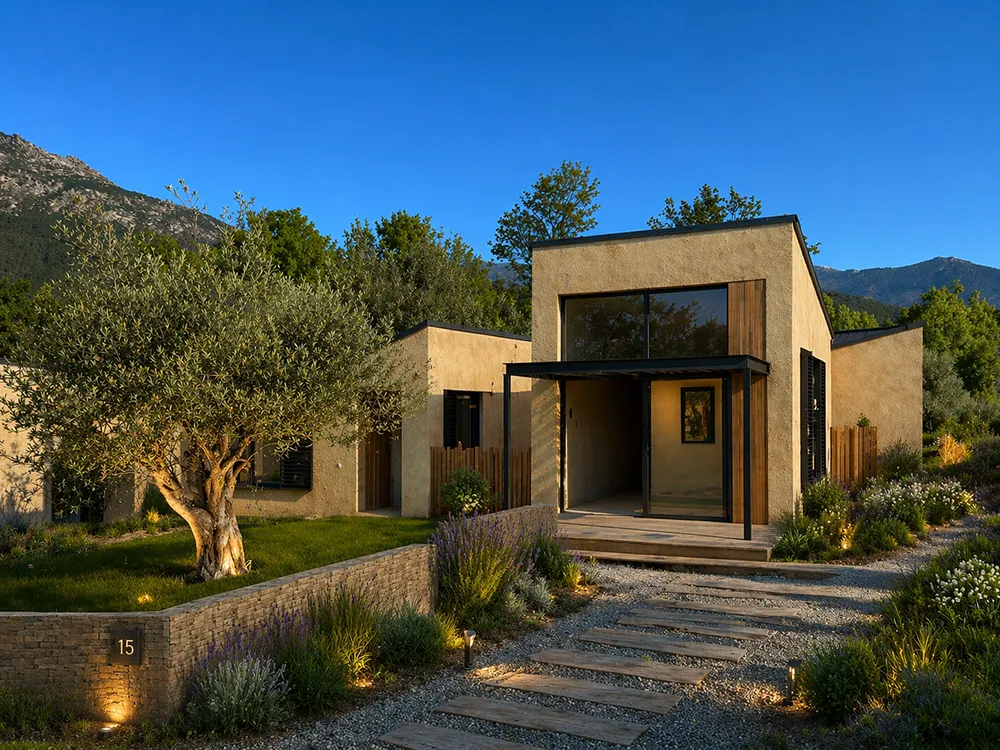
Centenary olive grove at Huellas del Tiétar. The future site of the boutique hotel. Lanzahíta, Ávila
Legal paperwork and administrative costs
For EU citizens getting married in Spain legally, the main cost is time rather than money: the expediente matrimonial (marriage file) requires gathering certified documents from your home country and submitting them to the relevant Spanish Registro Civil, a process that takes 2–4 months minimum. There are administrative fees (typically €100–€300) and possible document translation or apostille costs depending on your country of origin.
For couples from outside the EU — UK, US, Australia, Mexico, and elsewhere — the paperwork is more complex and often involves working with a Spanish gestor (administrative specialist). A Spanish gestor experienced in international marriage paperwork charges €300–€600 for this service and is well worth the investment.
Many international couples find the symbolic ceremony route simpler: register the marriage at home (a brief appointment at your local registry office or equivalent) and hold the full celebration as a symbolic ceremony in Spain. This is entirely valid, requires no Spanish administrative process, and is the approach most of our international couples take.
Total budget benchmarks: what does a destination wedding in Spain actually cost?
Bringing it all together, here are realistic total-budget benchmarks for a destination wedding at a premium rural estate in Spain in 2027, for 80–120 guests:
· Budget range: €25,000–€40,000
This is achievable with a weekday or off-season date, a tighter catering menu, local photographers and florists, and a self-coordinated vendor selection. The food and wine will still be exceptional — that’s the baseline at a venue like Huellas del Tiétar — but you’ll be making choices rather than having everything.
· Mid-range: €40,000–€65,000
A Saturday in high season, a full in-house catering experience with premium wine pairings, a destination wedding photographer, quality floristry, coordination, and a DJ for the evening. This is where most well-planned destination weddings with 80–100 guests land when they work with an established venue and a curated vendor list.
· Premium: €65,000+
Saturday in peak season, 120+ guests, elaborate floristry, multiple live musical acts, a videographer, and the full range of entertainment additions. Couples who prioritize the food and wine experience in particular — upgrading to the most extensive tasting menus and wine pairings — move into this range.
Note: these figures reflect the cost to the couple for the wedding day itself. They do not include guest travel to Spain, which is a cost guests bear individually and which is often considerably lower than guests expect. Madrid has direct flights from most major European cities, and budget carriers bring the UK, Germany, France, and the Netherlands within easy reach.
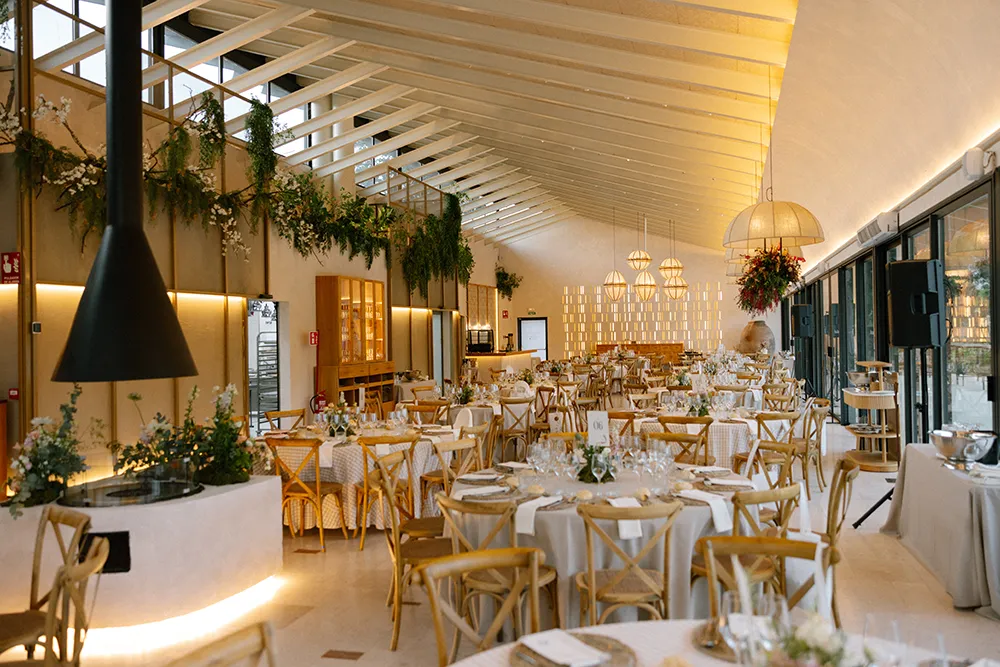
Banquet tables set for a wedding at Huellas del Tiétar: seasonal centerpieces, wine glasses, warm light. Lanzahíta, Ávila.
Frequently asked questions about destination wedding costs in Spain
Yes, with advance planning. EU citizens can marry legally in Spain by completing the expediente matrimonial process at a Spanish Registro Civil — plan for at least 3–4 months. Non-EU citizens face more documentation requirements and should start the process 6+ months out, ideally with the help of a Spanish gestor. Many international couples choose to complete the legal marriage at home and hold a symbolic ceremony in Spain, which removes the administrative complexity entirely.
Our venue works best with weddings from around 60 guests upwards, though we can accommodate smaller celebrations depending on the date and configuration. The estate’s spaces — including the 350 m² interior salon, the Pradera lawn, and the Explanada Sierra de Gredos — are designed to host events where the scale matches the setting. Contact us to discuss your specific numbers.
For 2027, the honest answer is: now. We are closing out the last available Saturday dates in high season. If you have a 2027 date in mind, contact us directly to check availability before it’s gone. For 2028 — the first year with on-site hotel accommodation available — we are actively booking now and Saturdays in high season are already moving. The couples who’ll have the most choice are the ones who enquire early.
Absolutely, and we strongly recommend it. Seeing Huellas del Tiétar in person, meeting the team, tasting the food, and walking the spaces is the only real way to know if it’s right for your wedding. We organize visits year-round and try to show you the estate in a season that matches your wedding date where possible. Contact us to arrange.
PLANNING A DESTINATION WEDDING IN SPAIN IN 2027 OR 2028?
Huellas del Tiétar is a wedding venue, winery, and (from late 2027) boutique hotel set in the Valle del Tiétar, 1 hour 45 minutes from Madrid. Chef Jorge García (2 Soles Repsol) leads our kitchen; our D.O.P. Cebreros wines are produced on the estate. From 2028, guests can stay on-site for a full wedding weekend experience.
If you’re planning a destination wedding in Spain and want to talk through dates, availability, and what a wedding at Huellas del Tiétar would actually look like for your group, we’d love to hear from you. Reach us at info@huellasdeltietar.com
We’re here when you’re ready.

